
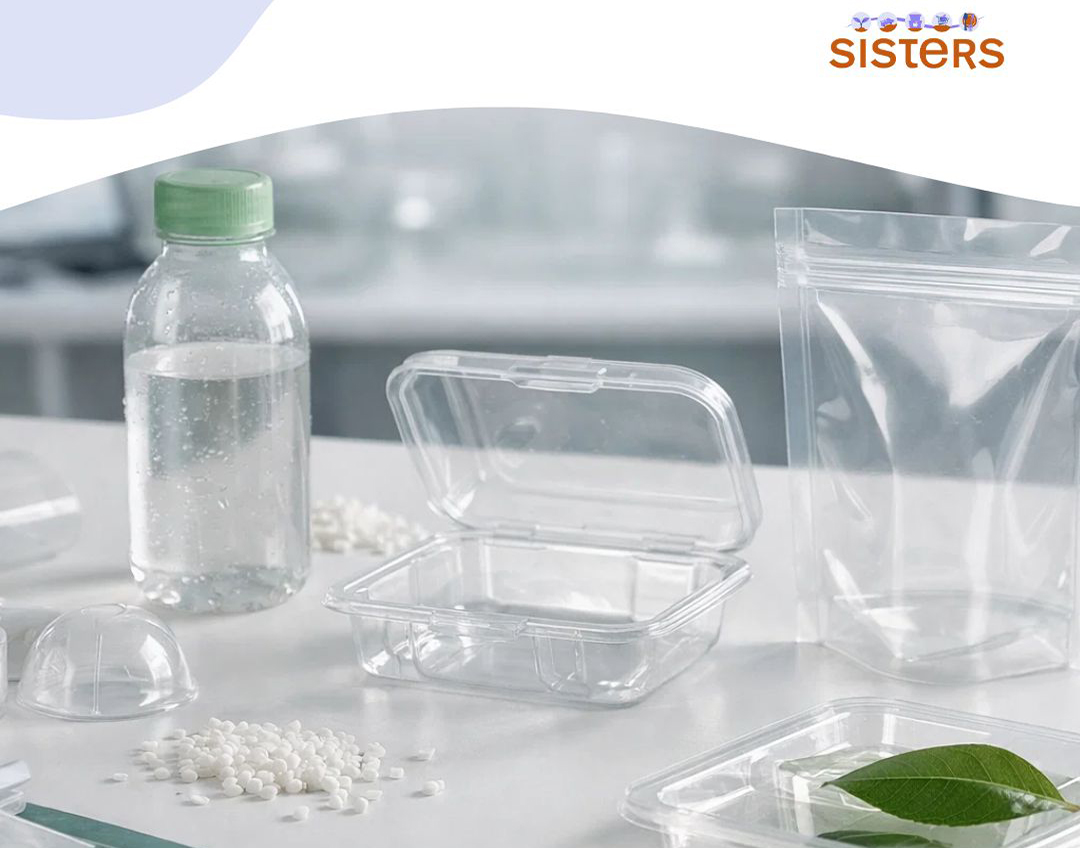
Sustainable Packaging Innovation: PLA and Compostable Additives in the SISTERS Project
Biobased, Compostable, Innovation, Reduce, Rethink, Reuse, Sustainability 12 de March de 2026Project Overview
Within the framework of the European project SISTERS (Horizon 2020), ITC Packaging is driving the development of sustainable packaging solutions based on polylactic acid (PLA) and compostable additives to extend shelf life and facilitate home composting. This initiative is part of a broader eco-design strategy for packaging aimed at reducing food waste and advancing towards a circular economy in the packaging sector.
PLA: A Renewable Bioplastic
PLA is a renewable bioplastic obtained from natural resources such as corn or sugarcane. Through the fermentation of sugars, lactic acid is produced, which is then polymerized to form the thermoplastic polymer PLA. This bio-based origin makes PLA an attractive alternative to conventional fossil-based plastics, especially in applications where sustainability is a key factor.
Technical Challenges in Industrial Processing
Adopting PLA in industrial processes such as plastic injection molding presents several technical challenges:
➢PLA is temperature-sensitive and can degrade if not processed correctly.
➢It absorbs moisture, which can compromise material properties.
➢It may deform during cooling, requiring precise control of temperature, pressure, and injection speed, as well as optimized mold design and compatibility with additives.
Current Status of the Project
Prototypes of packaging for products such as fruit, cheese, mushrooms, or fish have been developed, optimized for thickness, functionality, and stackability. These prototypes are currently being evaluated for:
✓Compostability
✓Shelf life of the contained products
✓Consumer acceptance
Upcoming milestones include the development of thinner packaging, with an anticipation of potential challenges related to biodegradation.
Conclusion
In summary, this work demonstrates that innovation in sustainable packaging extends beyond material selection; it also requires process engineering, industrial validation, and collaboration among various stakeholders in the food supply chain. Through the development of PLA-based packaging and compostable bio-additives, ITC Packaging is contributing to a real transition towards circular, efficient, and climate-aligned packaging solutions in Europe.


