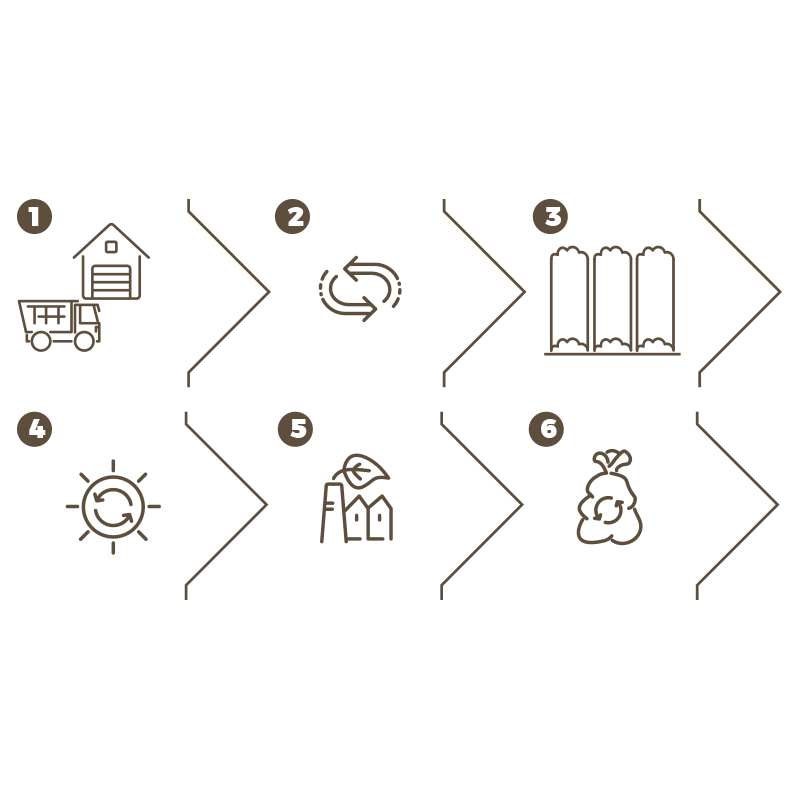
Composting is an aerobic (involving oxygen) biological process that, under controlled ventilation, humidity and temperature levels, is able to transform degradable organic waste into compost to be reused as organic fertiliser. Therefore, compostable containers may be reutilised by transforming them into compost at the end of their useful life.
Compostable materials are the most sustainable option in many cases, such as small sized containers or where most of the product remains within the packaging after its consumption such as with coffee pods.
All compostable containers must be subject to a certification process that will establish the conditions (time and temperature) required for the packaging to decompose, as well as to verify compliance with the time and in the manner established by current legislation. This regulation certifies the chemical composition, biodegradability, disintegration and quality of the resulting compost.
There are mainly two types of composting: industrial composting where the waste is treated at council owned plants, and domestic composting, where the residues may be degraded in a domestic composter. Each type of composting will have an established set of conditions for humidity, temperature and the amount of microorganisms required for decomposition to take place.